Svetlana Alexievich
Belarusian oral historian and Nobel laureate in literature.

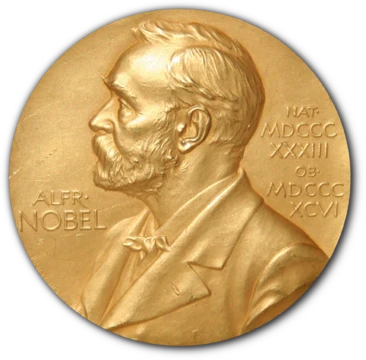
Svetlana Alexandrovna Alexievich (born 31 May 1948) is a Belarusian investigative journalist, essayist and oral historian who writes in Russian. She was awarded the 2015 Nobel Prize in Literature "for her polyphonic writings, a monument to suffering and courage in our time." She is the first writer from Belarus to receive the award. Her work constructs oral histories of major Soviet and post-Soviet events through witness testimonies, a method she calls "documentary literature."
- born
- 31 May 1948
- field
- Investigative journalism, essayist, oral historian
- nationality
- Belarusian
- known_for
- Polyphonic writings on Soviet history; Nobel Prize in Literature 2015
- notable_works
- War's Unwomanly Face, Zinky Boys, Voices from Chernobyl, Secondhand Time
Verified Timeline
Lore & Background
Svetlana Alexievich was born in the west Ukrainian town of Stanislav (Ivano-Frankivsk since 1962) to a Belarusian father and a Ukrainian mother, and grew up in Belarus. After graduating from high school she worked as a reporter in several local newspapers. In 1972 she graduated from Belarusian State University and became a correspondent for the literary magazine Nyoman in Minsk in 1976. In a 2015 interview, she mentioned early influences: "I explored the world through people like Hanna Krall and Ryszard Kapuściński."
Her documentary book Zinky Boys, about the fallen soldiers who had returned in zinc coffins from the Soviet-Afghan War of 1979–1989, was the subject of controversy in 1989, and she was accused of "defamation" and "desecration of the soldiers' honor." Alexievich was tried a number of times between 1992 and 1996. After political persecution by the Lukashenko administration, she left Belarus in 2000. The International Cities of Refuge Network offered her sanctuary, and during the following decade she lived in Paris, Gothenburg and Berlin. In 2011, Alexievich moved back to Minsk. Her first book, War's Unwomanly Face, came out in 1985. It was repeatedly reprinted and sold more than two million copies. The book was finished in 1983 and published in Oktyabr, a Soviet monthly literary magazine, in February 1984. Another book, The Last Witnesses: the Book of Unchildlike Stories, describes personal memories of children during wartime. In 1993, she published Enchanted by Death, a book about attempted and completed suicides due to the downfall of the Soviet Union. Her books were not published by Belarusian state-owned publishing houses after 1993. On 26 October 2019, Alexievich was elected chairman of the Belarusian PEN Center. During the 2020 Belarusian protests, Alexievich became a member of the Coordination Council of Sviatlana Tsikhanouskaya. On 26 August, she was questioned by Belarusian authorities about her involvement. On 9 September 2020, Alexievich alerted the press that "men in black masks" were trying to enter her apartment in central Minsk. "I have no friends and companions left in the Coordinating Council. All are in prison or have been forcibly sent into exile," she wrote.
Reader's Guide
Alexievich's significance lies in her development of a literary method that blends journalism, oral history, and art. She creates 'polyphonic writings' that give voice to ordinary individuals caught in extraordinary historical events—World War II, the Afghan War, the Chernobyl disaster, and the dissolution of the Soviet Union. Her work challenges official narratives and preserves the emotional and personal dimensions of history. She acknowledges the influence of Belarusian writer Ales Adamovich, who felt that the best way to describe the horrors of the 20th century was not by creating fiction but through recording the testimonies of witnesses. Belarusian poet Uladzimir Nyaklyayew called Adamovich "her literary godfather." Alexievich has confirmed the influence of Adamovich and Belarusian writer Vasil Bykaŭ, among others. She regards Varlam Shalamov as the best writer of the 20th century. Alexievich describes the theme of her works this way: "If you look back at the whole of our history, both Soviet and post-Soviet, it is a huge common grave and a blood bath. An eternal dialog of the executioners and the victims. The accursed Russian questions: what is to be done and who is to blame. The revolution, the gulags, the Second World War, the Soviet–Afghan war hidden from the people, the downfall of the great empire, the downfall of the giant socialist land, the land-utopia, and now a challenge of cosmic dimensions – Chernobyl. This is a challenge for all the living things on earth. Such is our history. And this is the theme of my books, this is my path, my circles of hell, from man to man."
She has been described as the first journalist to receive the Nobel Prize in Literature. She herself rejects the notion that she is a journalist, and, in fact, Alexievich's chosen genre is sometimes called "documentary literature": an artistic rendering of real events, with a degree of poetic license. In her own words: "I've been searching for a literary method that would allow the closest possible approximation to real life. Reality has always attracted me like a magnet, it tortured and hypnotized me, I wanted to capture it on paper. So I immediately appropriated this genre of actual human voices and confessions, witness evidences and documents."
Her legacy is that of a historian of the 'untraceable,' reducing history to the human being. Her Nobel Prize recognized her "for her polyphonic writings, a monument to suffering and courage in our time."
Did You Know?
- Alexievich was tried a number of times between 1992 and 1996 over her book Zinky Boys, accused of 'defamation' and 'desecration of the soldiers' honor.'
- She lived in Paris, Gothenburg and Berlin for a decade after political persecution by the Lukashenko administration, with sanctuary from the International Cities of Refuge Network.
- Her first book, War's Unwomanly Face, was finished in 1983 and first published in the Soviet monthly literary magazine Oktyabr in February 1984.
- Alexievich regards Varlam Shalamov as the best writer of the 20th century.
- On 9 September 2020, she reported that 'men in black masks' tried to enter her apartment in central Minsk.
More in Nobel And Booker Prize Laureates 1-23
Spotted an error? Know more?
This is a living reference — every entry is fact-audited, and reader corrections feed straight into our audit queue. Suggest an edit · See this site's audit record