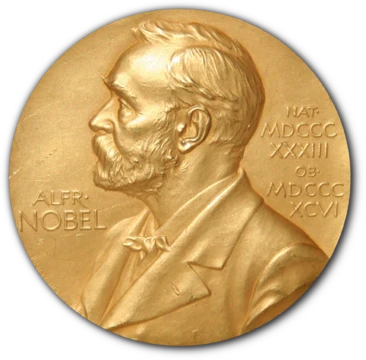
Abdulrazak Gurnah
Tanzanian Nobel laureate exploring colonialism and displacement.

via Wikipedia: Abdulrazak Gurnah · see source
Abdulrazak Gurnah is a Tanzanian novelist and academic of Yemeni origin, born on 20 December 1948 in the Sultanate of Zanzibar. He moved to the United Kingdom in the 1960s as a refugee during the Zanzibar Revolution and later became a professor of English and postcolonial literatures at the University of Kent. He was awarded the Nobel Prize in Literature in 2021 for his exploration of colonialism and the refugee experience.
- born
- 20 December 1948
- field
- Novelist, academic
- nationality
- Tanzanian (British citizen)
- known_for
- Nobel Prize in Literature 2021; novels including Paradise, By the Sea, Desertion
Verified Timeline
Lore & Background
Gurnah was born in Zanzibar and left at age 18 after the Zanzibar Revolution, arriving in England in 1968 as a refugee. He studied at Christ Church College, Canterbury, and earned his PhD from the University of Kent in 1982. He began writing out of homesickness in his 20s, starting with diary entries that grew into fictional stories about displacement. His first novel, Memory of Departure (1987), set the stage for themes of colonialism, war, and refugee experience. He taught at Bayero University Kano in Nigeria from 1980 to 1983, then at the University of Kent until his retirement in 2017, and became Emeritus Professor there. In 2024, he took up the position of Arts Professor of Literature at New York University Abu Dhabi.
Reader's Guide
Gurnah's significance lies in his literary focus on the effects of colonialism and the refugee experience, set largely on the East African coast. His novels, such as Paradise (shortlisted for the Booker and Whitbread Prize), By the Sea (longlisted for the Booker), and Desertion (shortlisted for the Commonwealth Writers' Prize), examine exile, displacement, and broken promises by the state. Though his first language is Swahili, he writes in English, integrating Swahili, Arabic, and German despite publisher resistance to marking these as foreign. His Nobel Prize in 2021 dramatically increased his readership, leading to reprints and new American editions. Critics note his characters are often uprooted and alienated, using irony and humor to respond to their situations. Gurnah also edited volumes on African writing and served as a judge for literary awards, including the Booker Prize.
Did You Know?
- Gurnah was the first Black writer to win the Nobel Prize in Literature since Toni Morrison in 1993.
- His first novel, Memory of Departure, was written alongside his PhD dissertation.
- He has criticized publishers for italicizing Swahili and Arabic words, arguing it makes 'the alien seem alien'.
- Gurnah was featured on BBC Radio 4's Desert Island Discs on 25 May 2025.
- He supports a boycott of Israeli cultural institutions and was an original signatory of the manifesto 'Refusing Complicity in Israel's Literary Institutions'.
Refugee Roots: Zanzibar to England
Abdulrazak Gurnah entered the world on 20 December 1948 in the Sultanate of Zanzibar, a coastal island whose ruling Arab elite would soon be swept away by revolution. His father and uncle had emigrated from Yemen to build commercial lives on the island, giving Gurnah a distinctly Arab heritage within a Swahili-speaking coastal culture. At just eighteen, the upheaval of the Zanzibar Revolution forced him to leave the island — which would later be absorbed into the newly formed nation of Tanzania — and he arrived in England in 1968 carrying the uncertain status of a refugee. Gurnah himself has reflected that the language of displacement was different in his era; words like "asylum-seeker" carried a different weight than they do today, when, as he observes, far more people are fleeing terror states. That single act of departure at eighteen shaped every subsequent choice: his studies, his writing, his lifelong preoccupation with what it means to be uprooted and to build a life in a land that was never originally your own.
The Scholar's Path: From Canterbury to Abu Dhabi
Gurnah's academic journey began at Christ Church College in Canterbury, where his undergraduate degrees were conferred through the University of London. He then moved to the University of Kent, completing a doctorate in 1982 with a thesis examining critical criteria in West African fiction. Before settling permanently at Kent, he spent three years (1980 to 1983) lecturing at Bayero University Kano in Nigeria, an experience that deepened his engagement with African literary traditions. At Kent, he rose to become a professor of English and postcolonial literature, teaching there until his retirement in 2017; the university subsequently named him Emeritus Professor of English and Postcolonial Literatures. His institutional life did not end there. On 1 September 2024, Gurnah accepted the chair of Arts Professor of Literature at New York University Abu Dhabi, extending his academic reach into the Gulf. Across four decades and three continents, his teaching and research have remained anchored in the same questions that drive his fiction: how colonialism reshapes identity, and how displaced peoples negotiate belonging in the spaces between nations.
Writing as Survival: Themes and Craft
Gurnah's fiction grew organically from personal need. In his twenties, homesickness drove him to fill a diary with thoughts about home; those entries swelled into longer meditations, then into stories about other people, and finally into his debut novel, Memory of Departure (1987), composed alongside his doctoral dissertation. From that first book forward, his work orbits a constellation of themes: the lingering trauma of colonialism, war, displacement, exile, and the broken promises of the state. Many of his protagonists are born in Zanzibar or set along the East African coast, and Gurnah has acknowledged that his homeland insists on appearing in his imagination even when he deliberately locates his stories elsewhere. His first language is Swahili, yet he writes in English, weaving in Swahili, Arabic, and German. He has openly criticized British and American publishers for italicizing or glossing foreign words, arguing such practices make the alien seem alien. Critics like Bruce King and Felicity Hand have noted how his characters, often uprooted and unwanted, are rendered with irony and humour, while Maaza Mengiste praises his unflinching yet compassionate insistence that we listen to stories people have not been able to tell.
Nobel Recognition and a New Chapter
In 2021, the Swedish Academy awarded Gurnah the Nobel Prize in Literature, citing his "uncompromising and compassionate penetration of the effects of colonialism and the fates of the refugee in the gulf between cultures and continents." The announcement sent shockwaves through the publishing world. For years, Gurnah's novels — including Paradise (1994), shortlisted for both the Booker and Whitbread Prizes, By the Sea (2001), and Desertion (2005), shortlisted for the Commonwealth Writers' Prize — had earned critical admiration but limited commercial reach, with some titles never published outside the United Kingdom and others falling out of print. After the Nobel, publishers and booksellers struggled to keep up with a sudden flood of demand. American publishers, who had previously shown little interest, began bidding aggressively; Riverhead Books released his novel Afterlives in August 2022 and subsequently acquired the rights to By the Sea and Desertion, two earlier works that had long been unavailable. Academic Hamid Dabashi has framed Gurnah's contribution as integral to how Asian and African migratory experiences have enriched English-language literature, noting that English was, in a sense, already native to him before he ever set foot in England.
More in Nobel And Booker Prize Laureates 1-23
Related in Nobel And Booker Prize Laureates
Links follow this subject's own source article.
Spotted an error? Know more?
This is a living reference — every entry is fact-audited, and reader corrections feed straight into our audit queue. Suggest an edit · See this site's audit record