André Gide
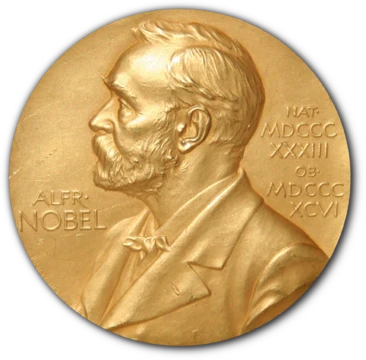
French author awarded the 1947 Nobel Prize in Literature.

via Wikipedia: André Gide · see source
André Paul Guillaume Gide was a French author whose writing spanned a wide variety of styles and topics. He was awarded the 1947 Nobel Prize in Literature. His career ranged from his beginnings in the symbolist movement to criticizing imperialism in the interwar period. Author of more than 50 books, he was described in his obituary in The New York Times as "France's greatest contemporary man of letters" and "judged the greatest French writer of this century by the literary cognoscenti."
- born
- 22 November 1869
- died
- 19 February 1951
- field
- Literature
- nationality
- French
- known_for
- Fiction, autobiographical works, Nobel Prize in Literature (1947)
Verified Timeline
Lore & Background
Gide was born in Paris on 22 November 1869 into a middle-class Protestant family. His father Jean Paul Guillaume Gide was a professor of law at University of Paris; he died in 1880, when the boy was 11. His mother was Juliette Maria Rondeaux. Gide was brought up in isolated conditions in Normandy. He became a prolific writer at an early age, publishing his first novel, The Notebooks of André Walter, in 1891, at the age of 21. In 1893 and 1894, Gide travelled in Northern Africa. There he came to accept his homosexuality. Gide befriended Irish playwright Oscar Wilde in Paris, where the latter was in exile. In 1895 the two men met in Algiers. In 1895, after his mother's death, Gide married his cousin Madeleine Rondeaux, but the marriage remained unconsummated. In 1896, he was elected mayor of La Roque-Baignard, a commune in Normandy. In 1908, Gide helped found the literary magazine Nouvelle Revue Française. During World War I, Gide visited England. In 1916, Gide was about 47 years old when he took Marc Allégret, age 15, as a lover. After Gide fled with Marc to London, his wife Madeleine burned all his correspondence—"the best part of myself", Gide later said. In 1923, Gide sired a daughter, Catherine, by Elisabeth van Rysselberghe. In 1924, he published an autobiography, If it Die... The same year, he defended homosexuality in the public edition of Corydon, receiving so much condemnation that he was blocked from being nominated to the Académie Française. From July 1926 to May 1927, Gide traveled through the colony of French Equatorial Africa with his lover Marc Allégret. He kept a journal, which he published as Travels in the Congo and Return from Chad. In this work, he criticized the behavior of French business interests in the Congo and inspired reform.
Reader's Guide
Gide's significance lies in his exploration of the conflict and eventual reconciliation of the two sides of his personality—characterized by a Protestant austerity and a transgressive sexual adventurousness. As a self-professed pederast, he used his writing to explore his struggle to be fully oneself, including owning one's sexual nature, without betraying one's values. His political activity was shaped by the same ethos. While sympathetic to Communism in the early 1930s, like many intellectuals, after his 1936 journey to the USSR he supported the anti-Stalinist left. Towards the end of his life, in the 1940s, he shifted towards more traditional values and repudiated Communism as an idea that breaks with the traditions of Christian civilization. In the 1920s, Gide became an inspiration for such writers as Albert Camus and Jean-Paul Sartre. He later considered Corydon his most important work. His criticism of French colonialism in Africa contributed to the growing anti-colonialism movements in France and helped thinkers to reevaluate the effects of colonialism in Africa. His work Retour de L'U.R.S.S. (Return from the USSR, 1936) was addressed to pro-Soviet readers, to expose them to doubts instead of presenting harsh criticism. While admitting the economic and social achievements of the USSR compared to the Russian Empire, he noted the decay of culture, the erasure of the individuality of Soviet citizens, and the suppression of any dissent.
Did You Know?
- Gide's father Jean Paul Guillaume Gide was a professor of law at University of Paris; he died when Gide was 11.
- Gide's wife Madeleine burned all his correspondence after he fled to London with Marc Allégret—Gide called it 'the best part of myself'.
- Gide sired a daughter, Catherine, in 1923 by Elisabeth van Rysselberghe, possibly his only sexual relationship with a woman.
- Gide considered Corydon, his public defense of homosexuality, his most important work.
- After his 1936 journey to the USSR, Gide supported the anti-Stalinist left and later repudiated Communism as breaking with Christian civilization.
More in Nobel And Booker Prize Laureates 1-23
Spotted an error? Know more?
This is a living reference — every entry is fact-audited, and reader corrections feed straight into our audit queue. Suggest an edit · See this site's audit record