Mo Yan
Chinese writer awarded the Nobel Prize in Literature in 2012.

via Wikipedia: Mo Yan · see source
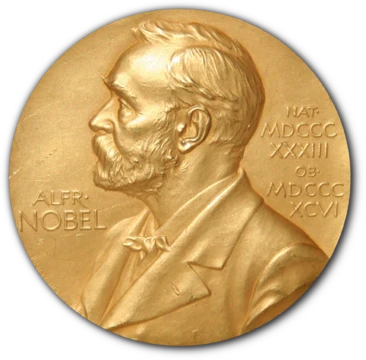
Mo Yan (born Guan Moye, 5 March 1955) is a Chinese writer who gained attention for his 1984 novella, *A Transparent Radish*, and rose to international fame for his 1986 novel *Red Sorghum*, the first two parts of which were adapted into the Golden Bear-winning film *Red Sorghum* (1988). In 2012, he was awarded the Nobel Prize in Literature for his work which 'with hallucinatory realism merges folk tales, history and the contemporary.'
- born
- 5 March 1955
- nationality
- Chinese
- known_for
- Nobel Prize in Literature (2012), novel Red Sorghum
Verified Timeline
Lore & Background
Mo Yan was born as Guan Moye in February 1955 into a peasant family in Ping'an Village, Gaomi Township, northeast of Shandong Province, China. He is the youngest of four children. Facing discrimination due to his family's classification as upper-middle peasant, and amid the Cultural Revolution, Mo Yan withdrew from school in the fifth grade at age 11. He taught himself Chinese characters from a Xinhua Dictionary while grazing animals. In autumn 1973 he began working at a cotton processing factory, where he encountered sent-down youth from Qingdao whose acquaintance with foreign literature left a strong impression. In early 1976, a friend helped him enlist in the PLA. Working as a librarian for the army, he read through the entire collection of over a thousand books in four years and began to write. In 1981, he published his first works in the literary magazine *Lian Chi* based in Baoding, where he was stationed. He adopted the pen name 'Mo Yan' (meaning 'don't speak') at that time. In 1984, he was admitted to the People's Liberation Army Academy of Art on the strength of his short story *Folk Music*, an imitation of Carson McCullers's *The Ballad of the Sad Café*. That same year, he published his first novella, *A Transparent Radish*, originally titled *A Golden Radish* but renamed by his mentor Xu Huaizhong. In 1986, he published *Red Sorghum* at *People's Literature* to great sensation, and Zhang Yimou visited him at the PLA Academy of Art to acquire adaptation rights for what would become Zhang's directorial debut, winning the Golden Bear at Berlinale.
Reader's Guide
Mo Yan's significance lies in his being the first Chinese citizen to receive the Nobel Prize in Literature, awarded in 2012. His early literary model was Sun Li, and he later came under the influence of William Faulkner and Gabriel García Márquez. In 1987, his novella *Joy* was published in *People's Literature* but fell foul of the Anti-Bourgeois Liberalization Campaign; the journal's editor-in-chief Liu Xinwu was suspended and the issue was recalled and destroyed. In April 1988, Mo Yan published *The Garlic Ballads*, inspired by an incident in Cangshan, Shandong where overproduction and collapsing prices drove farmers to riot. The novel was banned in mainland China after the Tiananmen Square crackdown of June 1989 and unbanned four years later. The American sinologist Howard Goldblatt, upon reading *The Garlic Ballads*, resolved to begin translating Mo Yan's work, which proved instrumental in bringing him to international audiences. In autumn 1988, Mo Yan enrolled in a postgraduate programme jointly run by the Chinese Writers' Association and Beijing Normal University, graduating with a master's degree in literature in 1991. In 1999, he was a referee for an online literature contest hosted by NetEase. Upon his receipt of the Nobel Prize, some writers and artists criticized him for being too close to the Chinese government, citing his participation in a 2012 celebration of the 75th Anniversary of the Yan'an Talks and his refusal to sign a petition for the release of Liu Xiaobo. Mo Yan stated he had no regrets for participating, saying 'I copied it because there is something valid in it; I broke from it because it could no longer satisfy the needs of my creative soul.' At a press conference in Stockholm, he stated he hoped Liu would be set free soon while comparing censorship to airport security checks. In 2016, Mo Yan became the deputy chair of the Chinese Writers Association.
Did You Know?
- Mo Yan's pen name 'Mo Yan' means 'don't speak' in Chinese and was first adopted in 1981 when contributing to the literary magazine *Lian Chi*.
- He taught himself Chinese characters from a Xinhua Dictionary while grazing animals after withdrawing from school in the fifth grade at age 11.
- As a PLA librarian, he read through the entire collection of over a thousand books in four years.
- His novella *Joy* (1987) caused the editor-in-chief of *People's Literature* to be suspended and the issue to be recalled and destroyed during the Anti-Bourgeois Liberalization Campaign.
- Mo Yan wrote *Life and Death Are Wearing Me Out* in 42 days, composing the more than 500,000 characters using only ink and a writing brush on traditional Chinese paper.
More in Nobel And Booker Prize Laureates 1-23
Spotted an error? Know more?
This is a living reference — every entry is fact-audited, and reader corrections feed straight into our audit queue. Suggest an edit · See this site's audit record