Kazuo Ishiguro
Japanese-British novelist awarded the 2017 Nobel Prize in Literature.

via Wikipedia: Kazuo Ishiguro · see source
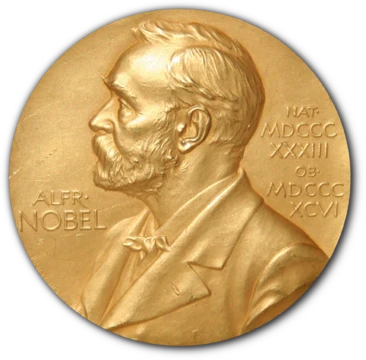
Sir Kazuo Ishiguro is a Japanese-British novelist, screenwriter, musician, and short-story writer, widely regarded as one of the most critically acclaimed contemporary fiction authors writing in English. He was awarded the 2017 Nobel Prize in Literature for novels that, in the words of the Swedish Academy, 'have uncovered the abyss beneath our illusory sense of connection with the world.'
- born
- 8 November 1954
- field
- Novelist, screenwriter, musician, short-story writer
- nationality
- Japanese-British
- known_for
- The Remains of the Day, Never Let Me Go, Nobel Prize in Literature 2017
Verified Timeline
Lore & Background
Kazuo Ishiguro was born in Nagasaki, Japan, on 8 November 1954, the son of Shizuo Ishiguro, a physical oceanographer, and his wife, Shizuko. In 1960, at age five, he moved with his family to Guildford, Surrey, after his father was invited to research at the National Institute of Oceanography. He did not return to visit Japan until 1989, nearly 30 years later. Ishiguro has stated that the Japanese settings of his first two novels were imaginary, built from a strong emotional tie to a country he remembered from childhood. He gained British citizenship in 1983. Ishiguro's early ambition was to become a professional songwriter; he learned guitar and wrote songs, influenced by Leonard Cohen, Joni Mitchell, and Bob Dylan. He has said that his style as a novelist comes substantially from what he learned writing songs, particularly the intimate first-person quality and the need to approach meaning subtly. After a gap year traveling through the United States and Canada, he studied at the University of Kent at Canterbury (BA in English and philosophy, 1978) and then at the University of East Anglia, where he completed the UEA Creative Writing Course under Malcolm Bradbury and Angela Carter, earning an MA in 1980. His thesis became his first novel, A Pale View of Hills (1982).
Reader's Guide
Kazuo Ishiguro's significance lies in his ability to explore universal themes—memory, loss, identity, and the illusory nature of human connection—through a range of genres, from the Japanese-influenced settings of his early work to the science-fiction-tinged parallel world of Never Let Me Go and the historical fiction of The Remains of the Day. His 1989 novel The Remains of the Day won the Booker Prize and was adapted into a celebrated 1993 film. Time named Never Let Me Go the best novel of 2005 and one of the 100 best English-language novels published between 1923 and 2005. The Nobel Prize in Literature in 2017 cemented his legacy, with the Swedish Academy praising his 'novels of great emotional force.' Ishiguro's work consistently examines the outsider's perspective and the search for an unattainable truth, often portraying recent history as a spider's web in which humans vainly struggle. He was appointed Knight Bachelor in 2018 and later to the Order of the Companions of Honour in 2024.
Did You Know?
- Ishiguro did not return to visit Japan until 1989, nearly 30 years after moving to Britain.
- He originally aimed to become a professional songwriter, learning guitar and writing songs influenced by Leonard Cohen, Joni Mitchell, and Bob Dylan.
- His first novel, A Pale View of Hills, was his MA thesis from the University of East Anglia.
- Time named Never Let Me Go the best novel of 2005 and one of the 100 best English-language novels published between 1923 and 2005.
- Ishiguro was appointed Knight Bachelor in 2018 and later to the Order of the Companions of Honour in 2024.
More in Nobel And Booker Prize Laureates 1-23
Spotted an error? Know more?
This is a living reference — every entry is fact-audited, and reader corrections feed straight into our audit queue. Suggest an edit · See this site's audit record