Patrick Modiano
French novelist and Nobel laureate known for autofiction.

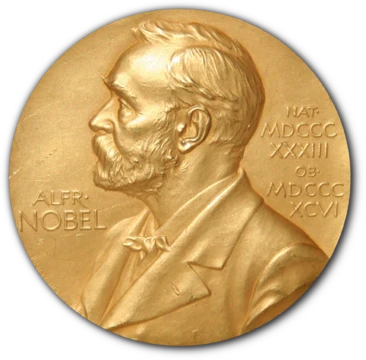
Patrick Modiano is a French novelist and recipient of the 2014 Nobel Prize in Literature. He is a noted writer of autofiction, the blend of autobiography and historical fiction. In more than 40 books, Modiano has used his fascination with the human experience of World War II in France to examine individual and collective identities, responsibilities, loyalties, memory, and loss. Because of his obsession with the past, and precisely, his own family's past, he is sometimes compared to Marcel Proust.
- born
- 30 July 1945
- field
- Novelist
- nationality
- French
- known_for
- Autofiction, Nobel Prize in Literature 2014, Prix Goncourt 1978
Verified Timeline
Lore & Background
Jean Patrick Modiano was born in Boulogne-Billancourt, a commune in the western suburbs of Paris, on 30 July 1945. His father, Albert Modiano (1912–77, born in Paris), was of Jewish-Italian origin; on his paternal side he was descended from the well known Italo-Jewish Modiano family of Thessaloniki, Greece. His mother, Louisa Colpeyn (1918–2015), was a Flemish actress. Modiano's parents met in occupied Paris during World War II and began their relationship semi-clandestinely (they separated shortly after Patrick's birth). His father had refused to wear the yellow badge that Jews were required to wear and did not turn himself in when Paris Jews were rounded up for deportation to Nazi concentration camps. He was picked up in February 1942, and narrowly missed deportation, thanks to a friend's intervention. During the war years Albert did business on the black market and was allegedly associated with the Carlingue, the Gestapo's French auxiliaries which recruited its leaders from the underworld. Albert Modiano never clearly spoke of this period to his son before his death in 1977. Patrick Modiano's childhood took place in a unique atmosphere. He was initially brought up by his maternal grandparents who taught him Flemish as his first language. The absence of his father, and frequently also of his mother who went on tour, brought him closer to his brother, Rudy, who was two years younger and died of a disease at age 9. Patrick Modiano dedicated his works from 1967 to 1982 to Rudy. Recalling this tragic period in his memoir Un Pedigree (2005), Modiano said: "I couldn't write an autobiography, that's why I called it a 'pedigree': It's a book less on what I did than on what others, mainly my parents, did to me."
His meeting with Queneau, author of Zazie dans le métro, was crucial. It was Queneau who introduced Modiano to the literary world, giving him the opportunity to attend a cocktail party thrown by his future publisher Éditions Gallimard. In 1968 at the age of 22, Modiano published his first book La Place de l'Étoile, a wartime novel about a Jewish collaborator, after having read the manuscript to Queneau. The novel displeased his father so much that he tried to buy all existing copies of the book. Earlier (1959) while stranded in London, Modiano had called his father to request a little financial assistance, but his father had rebuffed him. Another time (1965), his mother sent Patrick to the father's apartment to demand a tardy child-support payment, and in response the father's girlfriend called the police. From his first novel, which was awarded the Fénéon Prize and Roger Nimier Prize, Modiano has written about "the pull of the past, the threat of disappearance, the blurring of moral boundaries, 'the dark side of the soul.'"
In 1970, Modiano married Dominique Zehrfuss. In a 2003 interview with Elle, she said: "I have a catastrophic memory of the day of our marriage. It rained. A real nightmare. Our groomsmen were Queneau, who had mentored Patrick since his adolescence, and Malraux, a friend of my father. They started to argue about Dubuffet, and it was like we were watching a tennis match! That said, it would have been funny to have some photos, but the only person who had a camera forgot to bring the film. There is only one photo remaining of us, from behind and under an umbrella!" They had two daughters, Zina (1974) and Marie (1978).
Reader's Guide
Patrick Modiano's significance lies in his sustained literary exploration of memory, identity, and the moral ambiguities of World War II in France, particularly the Occupation. His autofictional approach, blending autobiography with historical fiction, creates a body of work that is remarkably homogeneous in theme, returning repeatedly to the pull of the past and the threat of disappearance. Modiano's novels, translated into more than 30 languages, were largely untranslated into English before his Nobel Prize, which brought him broader international recognition. His legacy is marked by major awards including the 2014 Nobel Prize in Literature, the 2012 Austrian State Prize for European Literature, the 2010 Prix mondial Cino Del Duca from the Institut de France for lifetime achievement, the 1978 Prix Goncourt for Rue des boutiques obscures, and the 1972 Grand Prix du roman de l'Académie française for Les Boulevards de ceinture. His work is often compared to Marcel Proust due to his obsession with the past and his own family history. Modiano's novels all delve into the puzzle of identity, and of trying to track evidence of existence through the traces of the past. Obsessed with the troubled and shameful period of the Occupation—during which his father had allegedly engaged in shady dealings—Modiano returns to this theme in all of his novels, book after book building a remarkably homogeneous work. "After each novel, I have the impression that I have cleared it all away," he says. "But I know I'll come back over and over again to tiny details, little things that are part of what I am. In the end, we are all determined by the place and the time in which we were born." He writes constantly about the city of Paris, describing the evolution of its streets, its habits and its people. In 1973, Modiano co-wrote the screenplay of Lacombe, Lucien with Louis Malle who directed the film. It focuses on a young french man joining the fascist Milice after being denied admission to the French Resistance. The film caused controversy due to the lack of justification of the main character's political involvement. The theme of memory is most clearly at play in Dora Bruder (entitled The Search Warrant in some English-language translations). Dora Bruder is a literary hybrid, fusing together several genres — biography, autobiography, detective novel — to tell the history of its title character, a 15-year-old daughter of Eastern European Jewish immigrants, who, after running away from the safety of the convent that was hiding her, ends up being deported to Auschwitz. Regarding Dora Bruder, he wrote: "I shall never know how she spent her days, where she hid, in whose company she passed the winter months of her first escape, or the few weeks of spring when she escaped for the second time. That is her secret."
Did You Know?
- Modiano's father narrowly avoided deportation in February 1942 thanks to a friend's intervention, and during the war he did business on the black market and was allegedly associated with the Carlingue, the Gestapo's French auxiliaries.
- Modiano's first novel, La Place de l'Étoile (1968), displeased his father so much that he tried to buy all existing copies of the book.
- Modiano's younger brother Rudy died of disease at age 9, and Modiano dedicated his works from 1967 to 1982 to him.
- Modiano's wedding in 1970 had groomsmen Raymond Queneau and André Malraux, who argued about Dubuffet during the ceremony, and the only photo of the couple is from behind and under an umbrella.
- Most of Modiano's novels had not been translated into English before he was awarded the Nobel Prize in 2014.
More in Nobel And Booker Prize Laureates 1-23
Spotted an error? Know more?
This is a living reference — every entry is fact-audited, and reader corrections feed straight into our audit queue. Suggest an edit · See this site's audit record