Orhan Pamuk
Turkish novelist and 2006 Nobel laureate in literature.

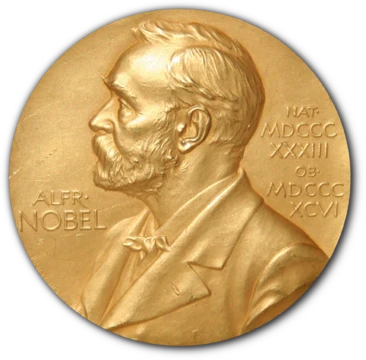
Ferit Orhan Pamuk (born 7 June 1952) is a Turkish novelist, screenwriter, academic, and recipient of the 2006 Nobel Prize in Literature. One of Turkey's most prominent novelists, he has sold over 13 million books in 63 languages, making him the country's best-selling writer. He is the Robert Yik-Fong Tam Professor in the Humanities at Columbia University, where he teaches writing and comparative literature. He was elected to the American Philosophical Society in 2018.
- born
- 7 June 1952
- field
- Novelist, screenwriter, academic
- nationality
- Turkish
- known_for
- Recipient of the 2006 Nobel Prize in Literature; author of My Name Is Red and Sn
Verified Timeline
Lore & Background
Pamuk was born in Istanbul in 1952 and grew up in a wealthy but declining upper-class family, an experience he describes in his novels The Black Book and Cevdet Bey and His Sons, as well as in his memoir Istanbul: Memories and the City. His paternal grandmother was Circassian. He was educated at Robert College secondary school in Istanbul and studied architecture at the Istanbul Technical University, a subject related to his dream career of painting. He left architecture school after three years to become a full-time writer, and graduated from the Institute of Journalism at the University of Istanbul in 1976. From ages 22 to 30, Pamuk lived with his mother, writing his first novel and attempting to find a publisher. He describes himself as a Cultural Muslim who identifies with Islam historically and culturally while not believing in a personal connection to God. Pamuk started writing regularly in 1974. His first novel, Karanlık ve Işık (Darkness and Light), was a co-winner of the 1979 Milliyet Press Novel Contest (Mehmet Eroğlu was the other winner). This novel was published with the title Cevdet Bey ve Oğulları (Mr. Cevdet and His Sons) in 1982 and won the Orhan Kemal Novel Prize in 1983. His second novel Sessiz Ev (Silent House) won the 1984 Madarali Novel Prize. His historical novel Beyaz Kale (The White Castle), published in Turkish in 1985, won the 1990 Independent Award for Foreign Fiction. On 19 May 1991, The New York Times Book Review wrote, 'A new star has risen in the east—Orhan Pamuk.' His 1990 novel Kara Kitap (The Black Book) became one of the most controversial and popular books in Turkish literature. Pamuk's fifth novel, Yeni Hayat (New Life), caused a sensation in Turkey upon its 1994 publication and became the fastest-selling book in Turkish history. By this time, Pamuk had also become a high-profile figure in Turkey due to his support for Kurdish political rights. In 1995, he was among a group of authors tried for writing essays that criticized Turkey's treatment of the Kurds. Pamuk's international reputation increased with Benim Adım Kırmızı (My Name Is Red) in 1998, which won the 2002 Prix du Meilleur Livre Étranger, the 2002 Premio Grinzane Cavour, and the 2003 International Dublin Literary Award. He followed this with Kar (Snow) in 2002, which The New York Times listed as one of its Ten Best Books of 2004. In 2005, a lawyer sued him over a statement acknowledging the Armenian genocide in the Ottoman Empire. Pamuk said his intention had been to highlight issues of freedom of speech in Turkey. The court initially declined to hear the case, but in 2011 Pamuk was ordered to pay 6,000 liras in compensation for having insulted the plaintiffs' honor. In 2019, the 66-year-old Nobel laureate held an exhibition of his photographs of Istanbul taken from his own balcony, 'Balkon: Photos by Orhan Pamuk'. Curated by Gerhard Steidl, the exhibition featured more than 600 colour photos selected from over 8,500 Pamuk took over a five-month period in late 2012 and early 2013.
Reader's Guide
Orhan Pamuk is significant as the first Turkish Nobel laureate in literature and one of Turkey's most prominent novelists, with over 13 million books sold in 63 languages. His willingness to write about contentious historical and political events put him at risk of censure in his homeland, as seen in the 2005 lawsuit over his statement on the Armenian genocide. Pamuk's novels, such as My Name Is Red and Snow, explore tensions between East and West, Islamism and Westernism, and have been translated into numerous languages, winning international awards. He was elected to the American Philosophical Society in 2018. His legacy includes not only his literary works but also his role in highlighting issues of freedom of speech in Turkey. The European Writers' Parliament came about as a result of a joint proposal by Pamuk and José Saramago. In 2019, he held an exhibition of his photographs of Istanbul taken from his own balcony, titled 'Balkon: Photos by Orhan Pamuk'.
Did You Know?
- Pamuk's first novel, Karanlık ve Işık, was a co-winner of the 1979 Milliyet Press Novel Contest, with Mehmet Eroğlu as the other winner.
- On 19 May 1991, The New York Times Book Review wrote: 'A new star has risen in the east—Orhan Pamuk.'
- In 1995, Pamuk was among a group of authors tried for writing essays that criticized Turkey's treatment of the Kurds.
- The European Writers' Parliament came about as a result of a joint proposal by Pamuk and José Saramago.
- In 2019, Pamuk held an exhibition of his photographs of Istanbul taken from his own balcony, featuring more than 600 colour photos selected from over 8,500 he took over five months.
More in Nobel And Booker Prize Laureates 1-23
Spotted an error? Know more?
This is a living reference — every entry is fact-audited, and reader corrections feed straight into our audit queue. Suggest an edit · See this site's audit record