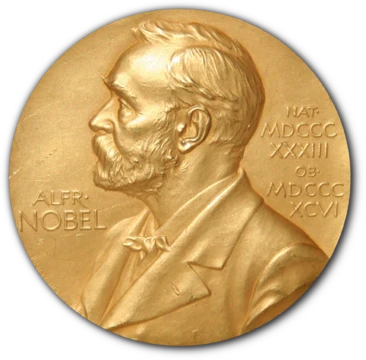
Nadine Gordimer
South African writer and anti-apartheid activist, Nobel laureate.

via Wikipedia: Nadine Gordimer · see source
Nadine Gordimer (20 November 1923 – 13 July 2014) was a South African writer and political activist. She received the Nobel Prize in Literature in 1991, recognised as a writer 'who through her magnificent epic writing has ... been of very great benefit to humanity'. Gordimer was one of the most honoured female writers of her generation. She received the Booker Prize for The Conservationist (1974), and the Central News Agency Literary Award for The Conservationist, Burger's Daughter (1979) and July's People (1981). Her writing dealt with moral and racial issues, particularly apartheid in South Africa. Under that regime, works such as Burger's Daughter were banned. She was active in the anti-apartheid movement, joining the African National Congress during the days when the organisation was banned, and gave Nelson Mandela advice on his famous 1964 defence speech at the trial which led to his conviction for life. She later became active in HIV/AIDS causes.
- born
- 20 November 1923
- died
- 13 July 2014
- field
- Writer, political activist
- nationality
- South African
- known_for
- Novels and short stories addressing apartheid; Nobel Prize in Literature (1991)
Verified Timeline
Lore & Background
Gordimer was born to Jewish parents near Springs, an East Rand mining town outside Johannesburg. She was the second daughter of Isidore Gordimer (1887–1962), a Lithuanian Jewish immigrant watchmaker from Žagarė (then part of the Russian Empire), and Hannah 'Nan' (née Myers) Gordimer (1897–1973), a British Jewish immigrant from London. Her father was raised with an Orthodox Jewish education before immigrating with his family to South Africa at the age of 13. Her mother came to South Africa at the age of 6 with her parents. Gordimer was raised in a secular household. Her early interest in racial and economic inequality was shaped in part by her parents: her father's experience as a refugee from Tsarist Russia helped form her political identity, but he was neither an activist nor sympathetic toward black people under apartheid; her mother founded a crèche for black children. As a teenager, Gordimer witnessed government repression first-hand when police raided her family home, confiscating letters and diaries from a servant's room. Home-bound as a child because her mother feared she had a weak heart, she began writing at an early age, publishing her first stories in 1937 at age 13. Her first published work was a short story for children, 'The Quest for Seen Gold', which appeared in the Children's Sunday Express in 1937. At age 16, she had her first adult fiction published. Gordimer studied for a year at the University of the Witwatersrand, where she mixed for the first time with fellow professionals across the colour bar and became involved in the Sophiatown renaissance. She did not complete her degree, but moved to Johannesburg in 1948, where she lived thereafter. In 1951, The New Yorker accepted her story 'A Watcher of the Dead', beginning a long relationship and bringing her work to a much larger public. Her first novel, The Lying Days, was published in 1953. The arrest of her best friend, Bettie du Toit, in 1960 and the Sharpeville massacre spurred Gordimer's entry into the anti-apartheid movement. She quickly became active in South African politics, was close friends with Nelson Mandela's defence attorneys (Bram Fischer and George Bizos) during his 1962 trial, and helped Mandela edit his famous speech 'I Am Prepared to Die', given from the defendant's dock at the trial. When Mandela was released from prison in 1990, she was one of the first people he wanted to see. She joined the African National Congress when it was still listed as an illegal organisation, hid ANC leaders in her own home to aid their escape from arrest, and said the proudest day of her life was when she testified at the 1986 Delmas Treason Trial on behalf of 22 South African anti-apartheid activists. Under apartheid, several of her works were banned: The Late Bourgeois World was banned in 1976 for a decade; A World of Strangers was banned for twelve years; Burger's Daughter, published in June 1979, was banned one month later, though the Appeal Board reversed the censorship three months later, determining the book was too one-sided to be subversive.
Reader's Guide
Nadine Gordimer's significance lies in her sustained literary and activist engagement with apartheid and its aftermath. Her novels and short stories, often banned by the South African government, provided unflinching examinations of moral and racial issues. She was active in the anti-apartheid movement, joining the banned African National Congress, hiding its leaders, and testifying at the 1986 Delmas Treason Trial. Her activism extended beyond apartheid: she resisted censorship and state control of information, refused to let her work be aired by the South African Broadcasting Corporation because it was controlled by the apartheid government, served on the steering committee of South Africa's Anti-Censorship Action Group, was a founding member of the Congress of South African Writers, and was Vice President of International PEN. In the post-apartheid era, she became active in the HIV/AIDS movement, organising about 20 major writers to contribute short fiction for Telling Tales in 2004, a fundraising book for South Africa's Treatment Action Campaign. She was critical of the South African government on this matter, noting in 2004 that she approved of everything President Thabo Mbeki had done except his stance on AIDS. In 2005, when Fidel Castro fell ill, Gordimer joined six other Nobel prize winners in a public letter to the United States warning it not to seek to destabilise Cuba's communist government. She refused to accept 'shortlisting' in 1998 for the Orange Prize because the award recognises only women writers. She was a vocal critic of the ANC government's Protection of State Information Bill, publishing a lengthy condemnation in The New York Review of Books in 2012. Her literary recognition culminated with the Nobel Prize in Literature on 3 October 1991, which noted that Gordimer 'through her magnificent epic writing has—in the words of Alfred Nobel—been of very great benefit to humanity'.
Did You Know?
- Gordimer's first published work was a short story for children, 'The Quest for Seen Gold', which appeared in the Children's Sunday Express in 1937 when she was 13.
- She helped Nelson Mandela edit his famous 1964 defence speech 'I Am Prepared to Die', given from the defendant's dock at the trial that led to his life conviction.
- When Mandela was released from prison in 1990, she was one of the first people he wanted to see.
- Gordimer refused to accept 'shortlisting' in 1998 for the Orange Prize because the award recognises only women writers.
- She organised about 20 major writers to contribute short fiction for Telling Tales in 2004, a fundraising book for South Africa's Treatment Action Campaign.
More in Nobel And Booker Prize Laureates 1-23
Spotted an error? Know more?
This is a living reference — every entry is fact-audited, and reader corrections feed straight into our audit queue. Suggest an edit · See this site's audit record