Frequently Asked Questions
The most-asked questions about nobel and booker prize laureates.
What are the Nobel and Booker Prizes in simple terms?
The Nobel Prizes are annual awards spanning physics, chemistry, medicine, literature, peace, and economics, funded from Alfred Nobel's estate and administered by Swedish and Norwegian institutions. The Booker Prize is a British literary award given each year to the best novel written in English and published in the UK or Ireland. Together they represent two of the most widely recognized honor systems in the scientific and literary worlds.
Who are some of the most celebrated laureates across both prizes?
In Nobel literature, Rabindranath Tagore, Toni Morrison, and Kazuo Ishiguro are frequently cited as landmark winners, while Marie Curie and Albert Einstein dominate the science side. Among Booker laureates, C.S. Forester, Kazuo Ishiguro, and Bernardine Evaristo are often highlighted as defining voices. These names tend to anchor most introductory discussions of both award histories.
Where should a newcomer start reading laureate works?
For Nobel literature, Tagore's 'Gitanjali' or Morrison's 'Beloved' are commonly recommended as accessible entry points. Ishiguro's 'The Remains of the Day' or Evaristo's 'Girl, Woman, Other' serve as popular starting novels for Booker readers. On the science side, Einstein's popular essays or Watson's 'The Double Helix' offer narrative-friendly introductions to Nobel-winning research.
What is the fundamental difference between the two awards?
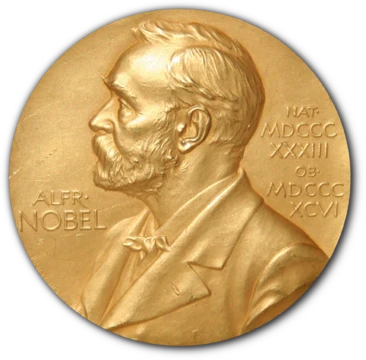
The Nobel Prizes cover multiple scientific and humanitarian disciplines and are decided by separate committees in Sweden and Norway, while the Booker is exclusively a fiction prize for English-language novels judged by a rotating British panel. Nobel recipients receive a gold medal and a cash award of roughly one million Swedish kronor, whereas Booker winners receive a smaller monetary sum and a trophy. The Nobel is a global, multi-category institution; the Booker is a single-genre, UK-centered literary prize.
Can a person win either prize more than once?
Marie Curie remains the only individual to have received two Nobel Prizes, in physics in 1903 and chemistry in 1911. No author has ever won the Booker Prize twice, though the award has been shared on a handful of occasions. As of the most recent years, no individual has collected both a Nobel Literature prize and a Booker.
What are some of the most memorable or controversial moments in the history of these awards?
The 1976 Nobel Literature prize was initially left unawarded and later granted to Saul Bellow, a decision that drew mixed reactions. The 2019 Booker win by Bernardine Evaristo for her multi-voiced novel was widely celebrated as a milestone for representation in the shortlist. In science, the 1903 physics prize shared with Marie Curie and Pierre Curie alongside Henri Becquerel remains a landmark moment for women in the field.
How are the laureates actually selected each year?
Nobel laureates are chosen by discipline-specific committees—the Swedish Academy for literature, the Karolinska Institute for medicine, the Norwegian Nobel Committee for peace—based on nominations submitted by qualified academics, former laureates, and institutional heads. The Booker process involves a rotating panel of five readers who narrow a longlist of roughly 130 eligible novels down to a shortlist of six, then select a single winner. Both processes are confidential during deliberation.
Which laureates are most frequently referenced in popular culture?
Marie Curie, Albert Einstein, and Martin Luther King Jr. are the Nobel names most often appearing in films, television series, and school curricula. In the literary sphere, Toni Morrison, Gabriel García Márquez, and Kazuo Ishiguro dominate book-club lists and academic syllabi. Booker winners such as Ian McEwan and Hilary Mantel have gained additional visibility through television adaptations and sustained critical discussion.
What is the typical age range of laureates when they receive their prize?
Nobel laureates in the sciences are usually in their fifties or sixties at the time of the award, reflecting the long gestation period of major research contributions. Booker winners span a broader range, with some authors in their early thirties and others well into their sixties. Malala Yousafzai, who received the Peace Prize at seventeen, remains the youngest laureate in the history of the Nobel.
How do these prizes shape the broader literary and scientific canon?
A Nobel or Booker win frequently propels a previously overlooked work into bestseller territory and into school curricula around the world. The awards also influence publishing trends, as agents and editors actively seek voices that align with the profile of past winners. Over decades, the combined body of laureate works forms a de facto canon that guides readers, scholars, and translators in deciding which texts to study and translate.